Showing posts with label Space travel. Show all posts

Friday, February 27, 2026

February 2026 Review of Reviews, Part Two


At last I am continuing with Part Two of my Review of Reviews for February 2026 (see Part One here). I figured I should post this before February is over. Here are my reviews of Rendezvous with Rama by Arthur C. Clarke, Wyrd Sisters by Terry Pratchett, The Great Hunt by Robert Jordan, How the World Made the West by Josephine Quinn, Pebble in the Sky by Isaac Asimov, A Few Rules for Predicting the Future by Octavia Butler, and Driftglass by Samuel R. Delany.

Iʻm also reading Michael Harriotʻs Black AF History for Black History Month. Iʻm loving it, but alas, Iʻm not quire done, so maybe Iʻll get that in the next batch.

You can find these and other reviews on my Goodreads.

Saturday, September 13, 2025

2025 Hugo Novels, Part 2, belatedly: Alien Clay by Adrian Tchaikovsky, Someone You Can Built a Nest In by John Wiswell, and The Tainted Cup by Robert Jackson Bennett


I meant to post this in July, after posting Part 1, but my summer plans overtook me. So here I am posting Part 2 after both my full Hugo ballot, a post on my Worldcon talks, and my report on Worldcon. Oh, well.

Here are my reviews of Alien Clay by Adrian Tchaikovsky, Someone You Can Built a Nest In by John Wiswell, and The Tainted Cup by Robert Jackson Bennett. The last of these won this year's Hugo for Best Novel, which didn't bother me as I enjoyed the book, but it did somewhat surprise me: I found it enjoyable, but ultimately not as innovative or interesting as the others.

Anyway, I was getting close to the Hugo voting deadline when I wrote my original reviews on Goodreads, so I've expanded them just a bit here.

Monday, May 20, 2024

Cosmic Hope or Lack Thereof: The Dark Forest by Liu Cixin (Translated by Joel Martinson)


I read (and loved!) Liu Cixin's The Three-Body Problem back in 2016. I vowed to read the sequels soon... and then I ... didn't. I'm honestly not sure why (maybe: aliens?), but I watched and mostly liked the Netflix adaptation of The Three-Body Problem, which reminded me that I really should pick up the sequel (there are actually a few things from the second book in the series as well, so that was fun).

I'm glad I finally read The Dark Forest! This feels like a different kind of book to me (maybe due to being a second book in a series, or leisurely in a more focused way, or maybe I'm a different reader now?). Still, I enjoyed it almost as much as the first one.

Saturday, January 7, 2023

The Cosmic Grind: Gateway by Frederick Pohl


Frederick Pohl's Gateway is a weirder book than I was expecting. I may change my mind after I think some more about what it was saying and what it was lampooning, so let's call this review a draft (technically a third draft).

But before I get into it, a quick news item! I will be discussing Gateway and other classic 20th century science fiction at Chattacon 48 (Jan. 13-15, 2023) here in Chattanooga, Tennessee, where I will be a panelist! Maybe I will see you there to carry on the discussion in person!

Saturday, July 2, 2022

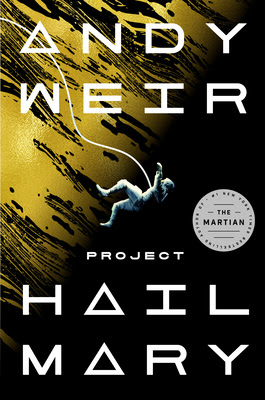
Xenobiology for Engineers: Project Hail Mary by Andy Weir


I seem to be one of the few people who liked Andy Weir's Project Hail Mary more than The Martian. It's mildly spoilery to say that the xenobiological aspects are what I enjoyed the most. At other times I felt like I was reading someone showing their work on their physics homework, but if you've read The Martian you know what you're in for. To mildly plagiarize a review I saw elsewhere: if you liked The Martian, you will probably also like Project Hail Mary.

Saturday, April 9, 2022

Gwendy and the Tower: Gwendy's Magic Feather and Gwendy's Final Task


Gwendy's Magic Feather by Richard Chizmar

I enjoyed the first Gwendy book and meant to read this second one for a while. Then when the third book came out recently and I heard it had explicit Dark Tower connections, I figured I should finally read this second book, too.

Sunday, December 5, 2021

Lunar Sleuthing: The Relentless Moon by Mary Robinette Kowal


I enjoyed Mary Robinette Kowal's third entry in the Lady Astronaut series (The Relentless Moon) more than the second volume (The Fated Sky), but not as much as the first one (The Calculating Stars). The biggest problem is that it's probably a lot longer than it needs to be, although maybe for what Kowal is going for, it's just as long as it needs to be.

Sunday, November 21, 2021

Hugo Ballot 2021: Novels and Novellas


My 2021 Hugo ballot continues (see short stories and novelettes here) with novellas and the most high-profile category: novels. You can see the full list of finalists here.

As I've mentioned before, I've been voting for the Hugos for several years, and I rely on my Three Principles of Hugo Voting (but maybe not exclusively: I've been consistently inconsistent in the past and it would be inconsistent to change that now).

You'd think extending the deadline to November instead of the usual late summer time would help, but then you'd be underestimating my powers of procrastination and how busy a time November is in my academic calendar. I think I did pretty well this year considering how many categories there are. I was even more down-to-the-wire than usual this year, but it would be a full job in itself just reading all that stuff, so I'm not going too hard on myself.

So without further ado, here's how I voted!

Wednesday, October 13, 2021

What would Gene Roddenberry think about William Shatner’s Blue Origin flight?


Today William Shatner took a trip on a Blue Origin rocket, and I had some thoughts about it and wrote some of them down in my pandemic journal as I was procrastinating doing the stuff I was supposed to be doing this morning. To be more honest than you're supposed to be at the beginning of a post like this, I have to admit I'm not sure what Gene Roddenberry would think about today's events. I never met him while he was alive, and I'm not as familiar with his biography as I'd like to be, but he did create Star Trek as an unabashed post-scarcity socialist utopia, so that's in the background of my thoughts. This question seemed to me like a catchy way to think about space travel, Star Trek, the Overview Effect, where we are as a global society, and where we're going. So here you have it...


Monday, November 30, 2020

Pandemic Journal, Part 16: Our Non-Normal November


My Pandemic Journal continues with Part 16: Our Non-Normal November. (I tried to think of something catchier. Maybe you can do better!) 

It has been a non-normal month (granted, we have had a lot of non-normal months lately). But this one had the bizarreness of the US election on top of everything else.

One thing that has become normal (at least on this blog): memes! Enjoy!

Sunday, November 22, 2020

Random Thoughts, Part 12: Our Random Pandemic--Now with Memes!


Made at: https://www.jasondavies.com/wordcloud/

My long running Random Thoughts series continues with Part 12! We recently had a big election here in the US that, much like the pandemic, has gone on longer than it needs to, so I've had a lot of random thoughts on politics and democracy. I also have things to say about academia, space, books, absurdity, lunch, religion, bibliophilia, and my 2020 hangover.


Just like my pandemic journal posts, my Random Thoughts now come with bonus random memes! Enjoy!


Sunday, June 21, 2020

Hugo Reading 2020: Novellas

Three of this year's Hugo nominees for Best Novella


Every year since I started voting for the Hugos in 2016, I've told myself that next year I'm going to start reading earlier. And every year, like clockwork, I fail to do so. I've got until July 15 to finish this year, so I'm procrastinating according to plan.

I've grown fond of novellas lately: long enough to get into a story, but not so long as to grow tiresome. You've got to start someplace, so this seemed like as good a reason as any to start with the novellas this year.

Saturday, May 16, 2020

Mini-Reviews of Unlikely TV Comedies for Pandemic Relief

What We Do in the Shadows


This pandemic is many things--horrifying, demoralizing, anxiety-provoking--but humorous is not one of them. Yet I've been finding solace as of late in TV comedies that find humor in unlikely situations. In fact, this is why I love comedy: in a universe hell-bent on killing us after heartbreak and suffering, sometimes laughing is the deepest, most appropriate response possible.

As I said in a post back in 2015,
In the face of the terrible things going on in the world that can easily drive us to depression and despair, humor is one of the few things that can keep us sane. It might also reveal something profound about the human condition.

So, here are my mini-reviews of unlikely TV comedies for pandemic relief: What We Do in the Shadows, Avenue 5, The Midnight Gospel, GLOW, Barry, Future Man, and Upload.

Thursday, April 30, 2020

Love, Philosophy, and Cosmic Melancholy: The Songs of Distant Earth by Arthur C. Clarke


The Songs of Distant Earth is not my favorite Arthur C. Clarke book, but it has its moments. Since he's my favorite of the Big Three 20th century SF writers (Clarke, Asimov, and Heinlein), I've been meaning to check it out. What spurred me to do so now is that I just finished Adrian Tchaikovsky's Arthur C. Clarke-Award-Winning Children of Time, which is a much newer and different book, but one with some Clarke-style Big Ideas (multiple waves of far future space exploration, hibernation, animal intelligence, etc.). In fact, I wouldn't be surprised if Tchaikovsky was influenced by this book.


Sunday, April 26, 2020

Humanities in Space: Children of Time by Adrian Tchaikovsky


Adrian Tchaikovsky's Children of Time is some of the best science fiction I've read recently. I love everything about this book: far future space travel, both human and non-human protagonists, a classicist as an essential crew member, deep thoughts about history, time, society, gender, intelligence, violence, biology, religion, science, and so much more.

I've put off writing a full review, because there's just so much going on in this book that I'm afraid I'll forget something important. At around 600 pages, it's not a short book, but it created a sort of time dilation in my reading experience: I read it fairly quickly (most of it in a weekend), but I feel like I traversed enough material for three or four novels in the time it took me to read one.

But I really want to review this book, so I figure I'll risk it. There's a lot more cool stuff going on in this book than I can hope to discuss in a review, so I'll focus on a few things under the theme "humanities in space" with a playful nod to "humanities" both as a plural and as a domain of intellectual activity encompassing history, philosophy, religion, rhetoric, literature, art history, languages, etc.


Tuesday, March 31, 2020

COVID-19 Journal, Part Four

A photo from my social distancing walk on Sun. 29 March 2020


Since today is the last day of the month, I figured this was a good cut-off for a series I had no idea I would be starting at the beginning of this looooong month of historic proportions. See my previous entry here.

Also since it's the last day of March 2020, here's a repeat of my entry from March 22.
March 2020: The month the human race came together and collectively sighed, “Well, fuck.”

Wednesday, November 13, 2019

Movie Round Up: Doctor Sleep, Terminator: Dark Fate, and Ad Astra


I haven't posted movie reviews in a few months (since September or July or even April). I have been seeing movies during this time, but somehow life and other matters have gotten in the way of writing reviews. Well, no more! The time has come to rectify this problem with reviews of three movies I've seen recently: Doctor Sleep, Terminator: Dark Fate, and Ad Astra. There's not much that unites them besides the facts that they are all broadly "speculative fiction" and they are all movies that some people didn't like, but I did.

Monday, October 14, 2019

Lunar Leitmotifs: Red Moon by Kim Stanley Robinson


Red Moon is definitely not destined to be among my favorite Kim Stanley Robinson novels.  It's nowhere near the Mars Trilogy, Aurora, or The Years of Rice and Salt (my personal favorites), nor is it quite as much fun as Galileo's Dream, as engaging as Shaman, or as wide-ranging as 2312.  In fact, Red Moon may be my least favorite of KSR's novels I've read.  But as I said in my review of New York 2140 (another book I liked but didn't love), I'd be happy to read KSR's grocery list.

The focus on China is interesting, although sometimes it felt as if people forgot that countries besides China and the US exist. China is going to be a major player in space exploration in the future, and it was interesting and presumably realistic to read about all the factions within the government. My favorite character was Ta Shu, a TV host with a penchant for what might be called "science fictional Feng Shui" and the vehicle for a lot of KSR's typical ruminations on history, philosophy, science, economics, etc.  The odd couple of Qi and Fred is fun, but in retrospect it was odd that it was always from Fred's POV and never from Qi's.

Friday, July 26, 2019

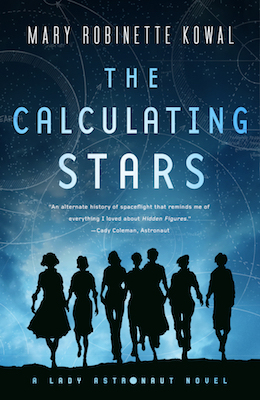
Lady Astronaut Mashup: The Calculating Stars by Mary Robinette Kowal


I thoroughly enjoyed Mary Robinette Kowal's The Calculating Stars, an alternate history mashup of Hidden Figures, The Right Stuff, and classic science fiction, all wrapped up in a thinly-veiled metaphor for climate change.  That doesn't entirely do it justice, of course, but you'll have to read it for yourself to see what I mean by all that.  I enjoyed this Hugo finalist so much, I just might give it my #1 spot on my ballot due in a few days.  Stay tuned to this blog to find out!

Saturday, July 20, 2019

50 Years After the Moon Landing: Where Are We Now?


Today is the 50thanniversary of Neil Armstrong and Buzz Aldrin becoming the first humans to walk on the moon with Michael Collins staying in orbit. (Since I first read about the Apollo 11 mission as a kid, I’ve always felt bad for Collins who went all the way to the moon without going for a walk!)
  
Usually statements like “one of the most amazing achievements in human history” are hyperbole, but in this case it’s completely true. The moon landing is well worth celebrating today. Have a party, raise a quiet toast to humanity, read NASA’s account here, or take a moment to glance at the moon and think, “God damn, humans went there!”
  
While celebration is a big part of this anniversary, for me it prompts the question: where are we 50 years later both when it comes to space exploration and our general condition here on Earth?
  
Space exploration, to put it mildly, has not gone the way many science fiction fans (including myself) have hoped.  Sure, we have the International Space Station and robotic missions to Mars and the rest of the solar system.  Voyager 1 and 2 are now in interstellar space. But no humans have been to the moon since 1972, and there have been no human missions elsewhere.  For people who read the great mid-20th century science fiction authors like Arthur C. Clarke, Isaac Asimov, and Robert Heinlein, this seems like a huge disappointment.  We were supposed to be living on the moon and Mars by now. Instead we got Twitter and Apple watches.
  
But is space exploration all that great a thing, anyway?  Sending humans into space is extremely expensive and dangerous, as my first major space memory, the Challenger disaster, demonstrates.  Would we be better off turning our attention to Earthly matters?  Why go to space when huge issues like poverty and climate change demand our attention here on Earth?  I’m not sure.
  
I admit that a lot of my love of space exploration stems from a romantic feeling, which is in turn spurred by my love of science fiction.  But it’s that very love of science fiction that tells me that venturing into space just might tell us a lot both about the universe and about ourselves (see Kim Stanley Robinson’s Mars trilogy or Ursula Le Guin’s Hainish novels for a bit on both fronts).  And as Octavia Butler suggested in her Earthseed duology, maybe we need a big goal like space exploration to keep us focused on something better than historical human preoccupations like killing and exploiting each other.
  
And for that matter, how are things here on Earth 50 years later?  The late 1960’s was a tumultuous era on Earth, times which it seems like we are re-entering today.  For sake of simplicity and familiarity, I’ll limit myself to the USA, but much could be said in many other places throughout the world (India, Brazil, Europe, etc.).
  
Who would have thought that 51 years after the assassination of Martin Luther King, Jr. we would have actual Nazis marching in the streets of America, emboldened by a sitting President who regularly says racist things and enforces cruel, racist immigration policies?  Who could have predicted 46 years after Roe v. Wade that many states would be instituting some of the harshest restrictions on abortion to date, or that 50 years after Stonewall it would still be legal to fire someone for being LGBTQ in over half the country?  Or that 55 years after Lyndon Johnson declared a War on Poverty, we would possibly be returning to 1920’s levels of economic inequality?
  
Given the resurgence, or at least increased visibility, of morally regressive tendencies in the last few years, how far have we really come in the last 50 years?  Interestingly, Octavia Butler maybe could have predicted this, given her depiction of a Presidential candidate who wanted to “make America great again.”
  
I don’t need to continue spelling things out.  The last few years have been a huge disappointment, at least for progressive types, many of whom, like me, have in retrospect been a bit naïve.
  
Yet, here’s a consideration: The fact that so many people are so disgusted is itself a good sign.  If everybody was on board with the recent surge in bigotry and injustice, nobody would be noticing or speaking out or complaining about it.  This feeling of despondency itself contains the seed of something better, a measure of where we might go, to hitherto unexplored territories of justice.
  
And maybe, just maybe, this spirit of pushing boundaries, of – dare I say it? – going where no one has gone before, is where something like space exploration and true justice for all coincide.  We’ve never had a reasonably just society and we’ve never adequately explored our extraterrestrial neighborhood.  We’ve had brief glimpses of both so far in science, science fiction, and social movements. 

So, maybe the moon landing of July 20, 1969 can represent our glimpses of new and better things for humanity. It is with this hope that I celebrate today.